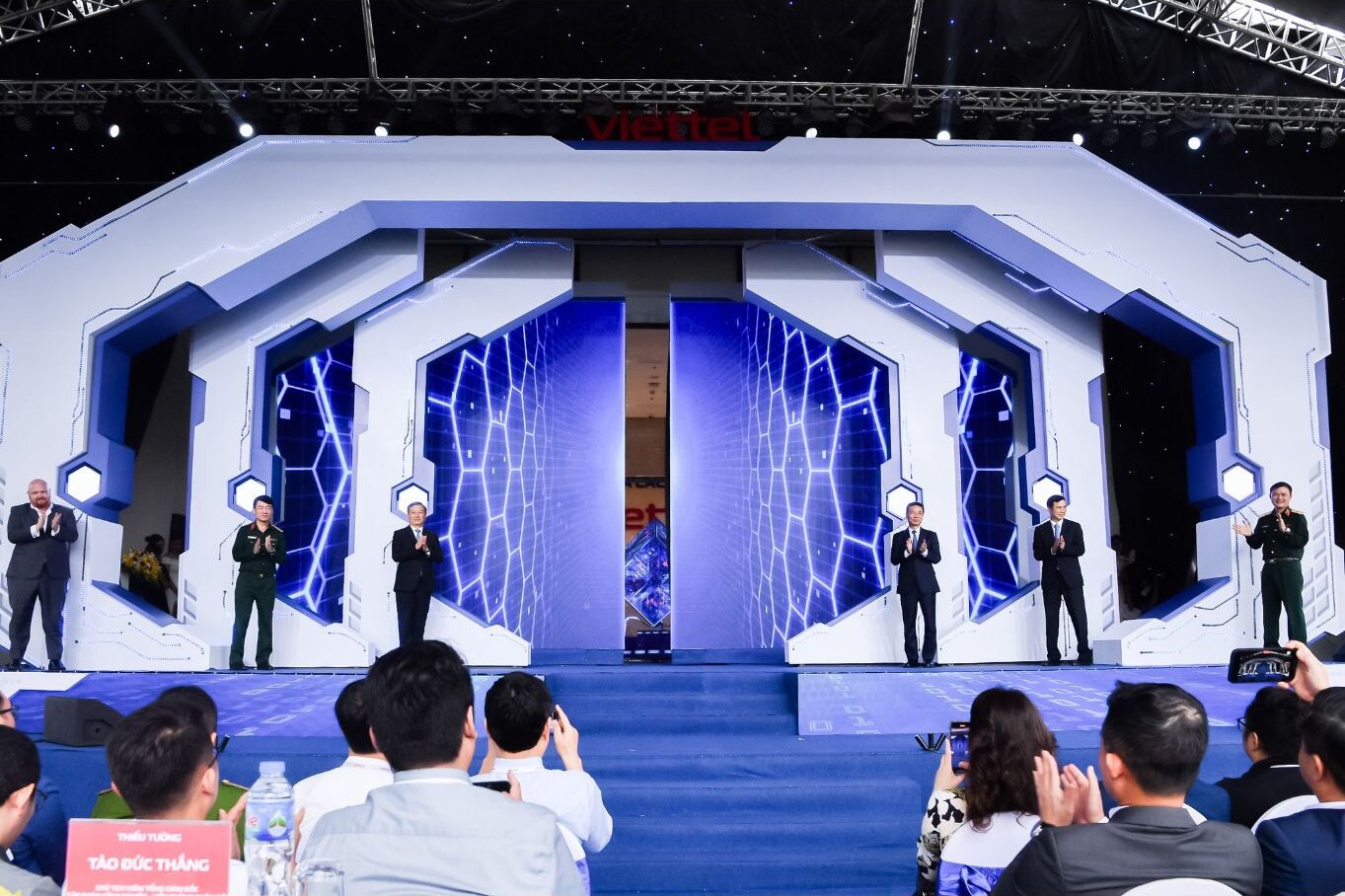
Cloud strategy is often discussed as a choice between technology platforms. In practice, the decision is broader. Organizations must consider where their data is stored, how applications connect to users, which regulations apply, what skills are available, and who can support critical workloads when something goes wrong.
This is where a local cloud platform can create strategic value. Viettel Cloud combines cloud services with Viettel's domestic data center, telecommunications, connectivity, and cybersecurity capabilities. For organizations operating in Vietnam, that combination can help connect infrastructure decisions with data sovereignty, performance, operational support, and long-term digital transformation.
Why sovereign cloud infrastructure matters
Digital sovereignty does not simply mean keeping data inside national borders. It is the ability to maintain meaningful control over data, infrastructure, operations, security, and service continuity.
For government agencies, financial institutions, healthcare organizations, telecommunications companies, and other regulated sectors, the physical and legal location of data can materially affect architecture decisions. Domestic infrastructure may help organizations address requirements related to data residency, latency, auditability, and local operational support.
A local platform can also simplify connectivity. When cloud resources, enterprise networks, internet services, and private links are available through the same broader infrastructure ecosystem, architects have more options for building predictable and secure application paths.
More than virtual machines
A mature cloud platform must support the complete application lifecycle, not only virtual servers. Public information from Viettel Cloud shows an ecosystem that spans compute, storage, container platforms, databases, application delivery, DevOps, security, and services intended for AI workloads.
These capabilities support several different operating models:
- Infrastructure as a Service for teams that need control over virtual machines, networks, security policies, and storage.
- Container and Kubernetes platforms for modern applications that require automated deployment, scaling, and recovery.
- Managed database services that reduce the operational effort required for provisioning, maintenance, backup, and monitoring.
- DevOps tooling that connects source code, build pipelines, deployment, and application operations.
- GPU and AI infrastructure for training, inference, analytics, and emerging generative-AI use cases.
- Security services that can be integrated into the platform and operating model rather than treated as an external layer.
The architectural value comes from combining these capabilities consistently. Identity, networking, logging, backup, security, and governance should work across services rather than becoming isolated technology silos.
Infrastructure investment for cloud and AI
AI is changing the physical design of digital infrastructure. High-density GPU clusters require significant power, advanced cooling, high-performance networking, and reliable data platforms. Traditional data centers were not always designed for this operating profile.
Viettel has publicly announced continued investment in data center capacity, including a green data center designed for AI development and a hyperscale data center project in Ho Chi Minh City. These investments signal a move beyond conventional hosting toward infrastructure built for large-scale cloud and AI services.
For customers, the important question is not only how much capacity exists. They should also evaluate availability zones, power and cooling resilience, network diversity, recovery options, service operations, and the ability to expand without redesigning the complete platform.
Where Viettel Cloud can fit
Viettel Cloud may be particularly relevant when an organization needs a combination of local infrastructure and broader enterprise technology services. Common scenarios include:
- Hosting regulated applications and data within Vietnam.
- Modernizing legacy systems through a phased hybrid-cloud model.
- Building digital government and citizen-facing services.
- Deploying business applications that require low-latency domestic connectivity.
- Creating backup and disaster-recovery environments.
- Running Kubernetes-based platforms and internal developer environments.
- Developing AI, analytics, computer-vision, or IoT workloads that benefit from local compute and data access.
This does not mean every workload should move to one cloud. Many enterprises will continue to use private cloud, local cloud, and global hyperscale platforms together. The right objective is workload placement: selecting the environment that best meets each application's security, performance, compliance, operational, and commercial requirements.
Architecture questions customers should ask
Before choosing any cloud platform, teams should move beyond a feature checklist and test how the service will operate in their real environment.
- Workload classification: Which applications and data are suitable for public cloud, private cloud, or a hybrid model?
- Availability design: How are failures handled across compute, storage, network, data center, and regional layers?
- Connectivity: Which internet, leased-line, VPN, SD-WAN, or private-connectivity options are available?
- Security responsibility: Which controls are operated by the provider, and which remain the customer's responsibility?
- Data protection: How are backup, replication, retention, recovery testing, and encryption managed?
- Operations: Are monitoring, logging, incident response, service management, and support aligned with business requirements?
- Portability: Can applications and data be migrated or integrated without creating unnecessary lock-in?
- Commercial governance: How will teams forecast demand, allocate costs, and prevent uncontrolled consumption?
Clear answers to these questions are more valuable than a long product catalog. They reveal whether the platform, operating model, and customer organization are ready to support production workloads together.
A practical migration approach
Cloud adoption should be treated as a managed transformation rather than a bulk infrastructure move. A practical sequence is:
- Assess: inventory applications, dependencies, data, risk, performance, and compliance requirements.
- Design the landing zone: establish identity, network segmentation, security, logging, backup, naming, and cost governance.
- Pilot: select a useful but controlled workload to validate performance, operations, support, and recovery.
- Migrate in waves: group workloads by dependency and business priority instead of moving systems individually.
- Optimize: improve resource sizing, automation, resilience, security posture, and cost after real usage becomes visible.
This approach reduces risk while building the skills and operational confidence required for larger migrations.
The strategic opportunity
Vietnam's next phase of digital growth will require more than additional server capacity. It will require trusted platforms that connect cloud computing, high-performance networks, cybersecurity, data, AI infrastructure, and local operational capability.
Viettel Cloud's opportunity is to bring these elements together as an integrated digital infrastructure platform. Its long-term value will depend on consistent service quality, transparent architecture, a strong developer and partner ecosystem, and the ability to help customers move from infrastructure consumption to measurable digital outcomes.
For enterprise architects, the decision should not be framed as local cloud versus global cloud. The better question is: which combination of platforms gives each workload the right balance of sovereignty, capability, resilience, performance, and cost?